
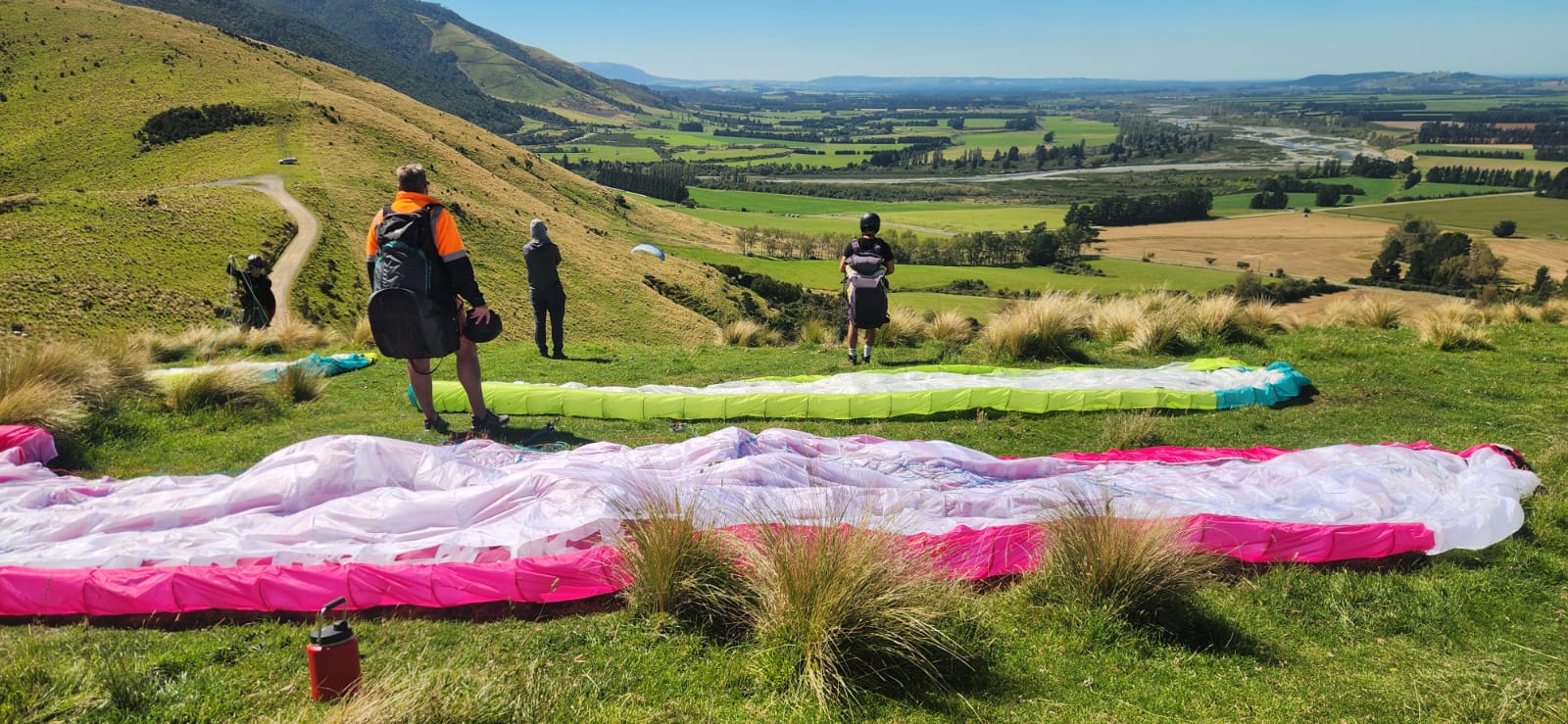
Paragliding
Learn to paraglide in Christchurch
Zero to Pilot Programme
From never flown to flying free
Explore New Zealand’s mountains from the air with your mates. You’ll be airborne on your very first day.
Most people think learning to paraglide takes months before you leave the ground. At Parapro, your first flight happens after just 2 to 3 hours of ground training. From there, I’ll train you all the way through PG2, preparing you to fly on your own with confidence.
- Fly on day one, after just 2 to 3 hours of ground training
- 45 training flights (5 more than the NZHGPA minimum)
- All gear provided: glider, harness, helmet and radio
- Complete theory: aerodynamics, meteorology, flight rules and VNC charts, with exam preparation
- Flexible scheduling around your work and life
- Free rebooking whenever the weather isn’t right
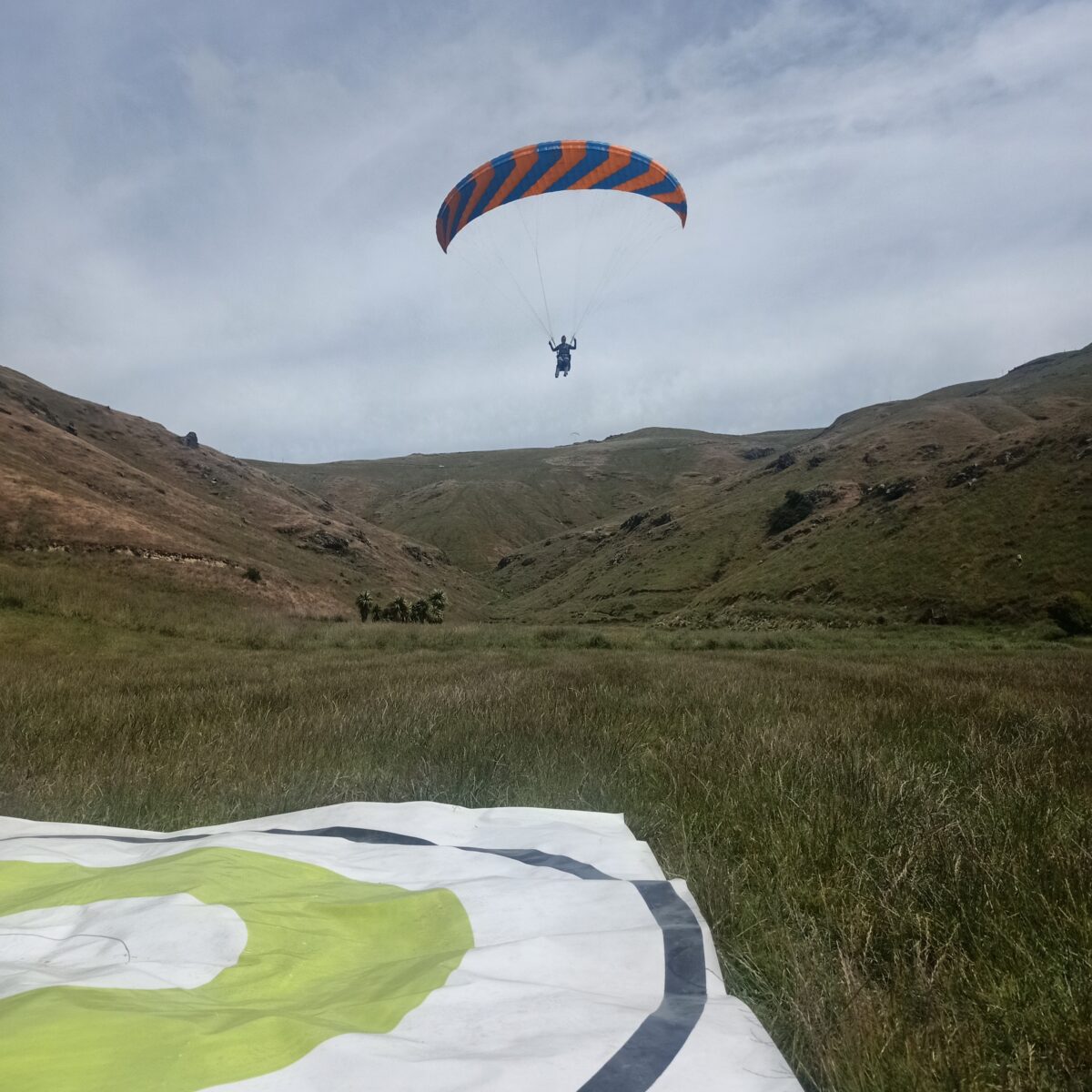
- Exclusive flying sites out of town for when local conditions aren’t right
- A personal gear tailoring session when you’re ready for your own wing
- An optional graduate day at a new site once you’re licensed
One instructor from your first flight to the end of your PG2 training. I know exactly where you’re at, and every session builds on the last.
My safety promise
Paragliding isn’t for everyone, and I’d rather be honest than take your money. If after PG1 either of us decides flying isn’t the right fit for you, I’ll refund the full PG2 portion. No awkward conversations.
Zero to Pilot Programme
$3,500
Intro day, PG1 and PG2: everything from your first flight to the end of your PG2 training
Paid upfront: your training spot and dates are locked in, and the PG2 refund guarantee applies. Or pay as you go: Intro day $300, PG1 $600, PG2 $2,600.
Small groups: every student gets proper attention and plenty of airtime, every session.
How the training works
We divide paragliding training into three stages which follow one after the other – Intro day, PG1 and PG2 training.
It always starts with an intro day, from there you can choose whether you will continue with your training.
After signing up you will join our WhatsApp school chat via which we will communicate daily plans and share photos and videos from your training.
Times and locations of training can be different from day to day and are chosen based on the weather.
You’ll be provided with a paraglider, harness, helmet and a radio.
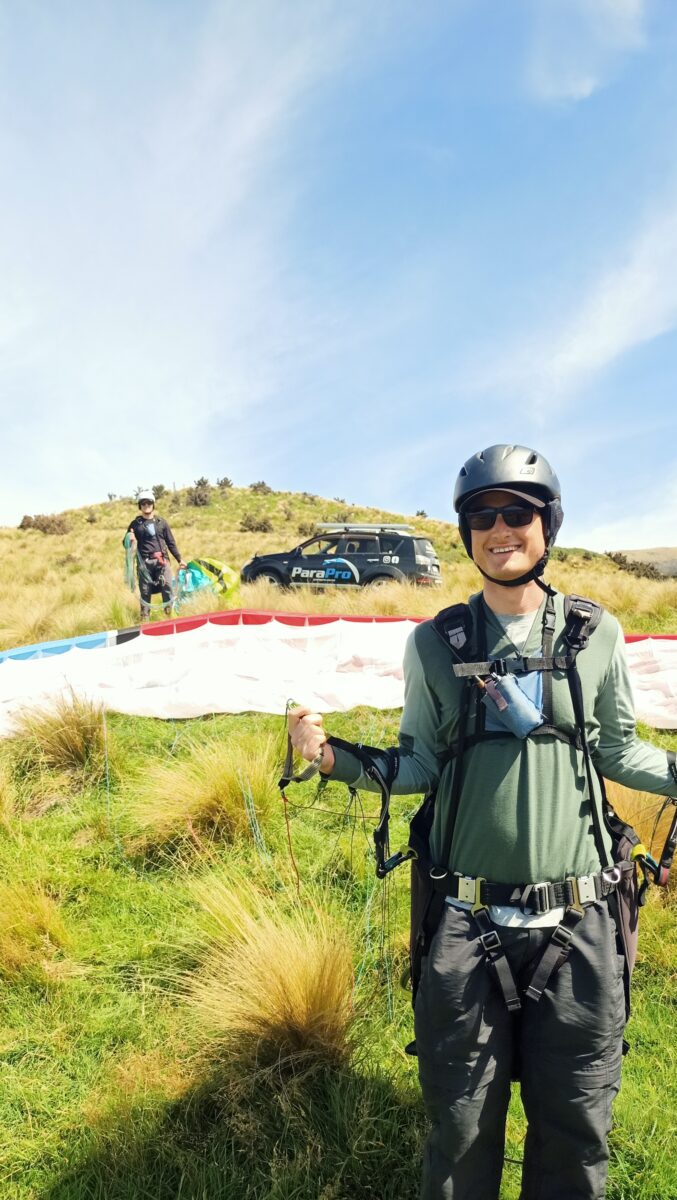
Step 01 · Intro day
Your first taste of paragliding
Never flown before? Start with an Intro Day. You’ll get hands-on with the equipment, learn the basics of controlling a paraglider and, conditions permitting, take your first flights with instructor supervision.
What to expect
Intro day is for those who just want to have a taster of what paragliding is about but also for all those who already know they aim for full licence.
Typical intro day runs between 9am and 2pm. Those who carry on to PG1&2 can stay longer for more flying.
You need
- Sporty shoes and clothing, drink and a light snack recommended
- 1 day membership with NZHGPA ($20 — nzhgpa.org.nz/membership)
Intro day
$300
2 flights + gear hire
Step 02 · PG1 – Beginner course
Build your foundations
PG1 takes what you experience on your Intro Day and turns it into proper pilot training. You’ll develop your ground handling, launching, landing and basic flight skills while learning how weather, terrain and your decisions affect every flight.
What to expect
PG1 training involves 6 additional flights (8 in total with intro day), some of which may happen on first day of your training.
You will also sit a theory session helping you better understand things like rules of right of way in traffic.
Most pilots only need 2-3 days to complete their flights and theory session.
After obtaining your PG1 rating, you are eligible to fly supervised by an instructor.
You need
- Sporty shoes and clothing, drink and a light snack recommended
- Student membership with NZHGPA (nzhgpa.org.nz/membership)
PG1 course
$900
Price includes: Intro day + PG1 (gear hire + 8 flights + 1 theory)
($600 if you’ve already done intro day)
Step 03 · PG2 – Full licence course
Independent flying awaits!
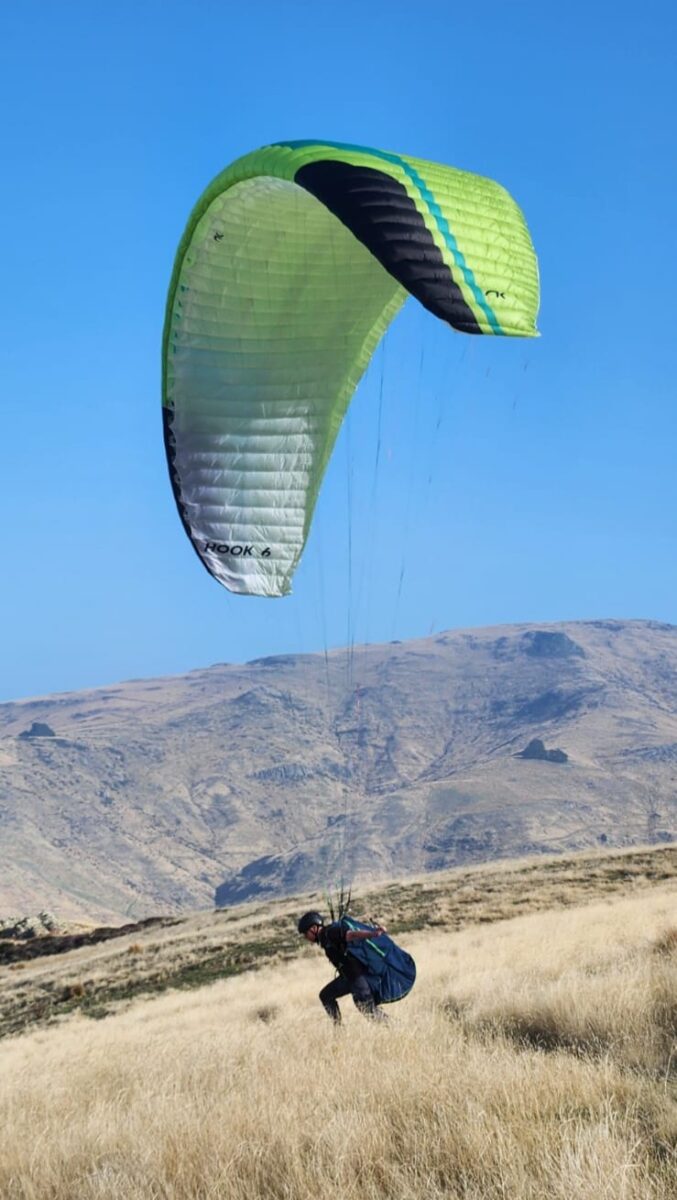
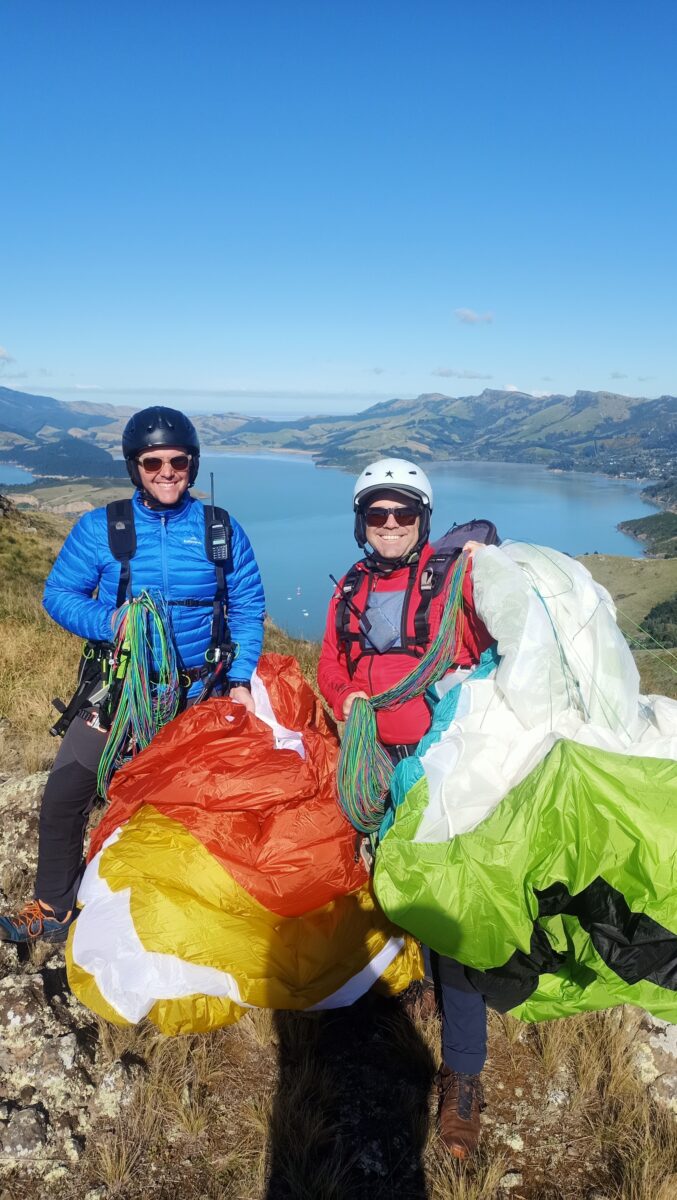
PG1 is the gateway to paragliding. If you want to progress towards flying without instructor supervision, PG2 is the next step. PG2 develops your ability to assess conditions, make your own decisions and use soaring techniques safely. You’ll build experience across different sites and conditions while working towards the NZHGPA requirements for your pilot licence.
What to expect
PG2 training involves 37 additional flights. 45 flights in total with intro and PG1 training.
PG2 licence requires min. 40 flights. ParaPro offers 45 flights if required.
Now you will learn best soaring practices as well as weather and sites assessment, aerodynamics and control of your glider in various air conditions.
We recommend 9 day blocks (5 days off + 2 weekends) for continuity of training and consistent learning. The rest of training can be completed after work or on weekends.
PG2 rating allow you to fly independently without supervision.
You need
- Sporty shoes and clothing, drink and a light snack recommended
- Student membership with NZHGPA (nzhgpa.org.nz/membership)
Full course
$3,500
Price includes: Intro day + PG1 + PG2 (gear hire + 45 flights + 4x theory)
($2,600 after intro & PG1)
Where does the course take me?
Completing the course does not automatically mean you receive a licence. Your instructor assesses whether you’ve demonstrated the required skills, knowledge and judgement and submits the necessary paperwork to the NZHGPA.
The goal isn’t to get you a licence as quickly as possible. The goal is to help you become ready to use it responsibly.
Your licence is just the beginning
Why learn with ParaPro?
Safety through understanding
We teach you to understand conditions and make decisions, not simply follow instructions.
Modern training
ParaPro continually brings new teaching methods, technology and ideas into its training.
More opportunities to fly
Access to additional flying sites gives you more opportunities to experience different conditions and terrain.
Become part of flying
Good pilots don’t just know how to fly. They understand how to behave at sites, respect other pilots and contribute to the flying community.
Still have questions? See our Frequently Asked Questions